
eSIM for Long Trips: How to Stay Connected for Weeks

Trish JonesTravel Blogger
Published:
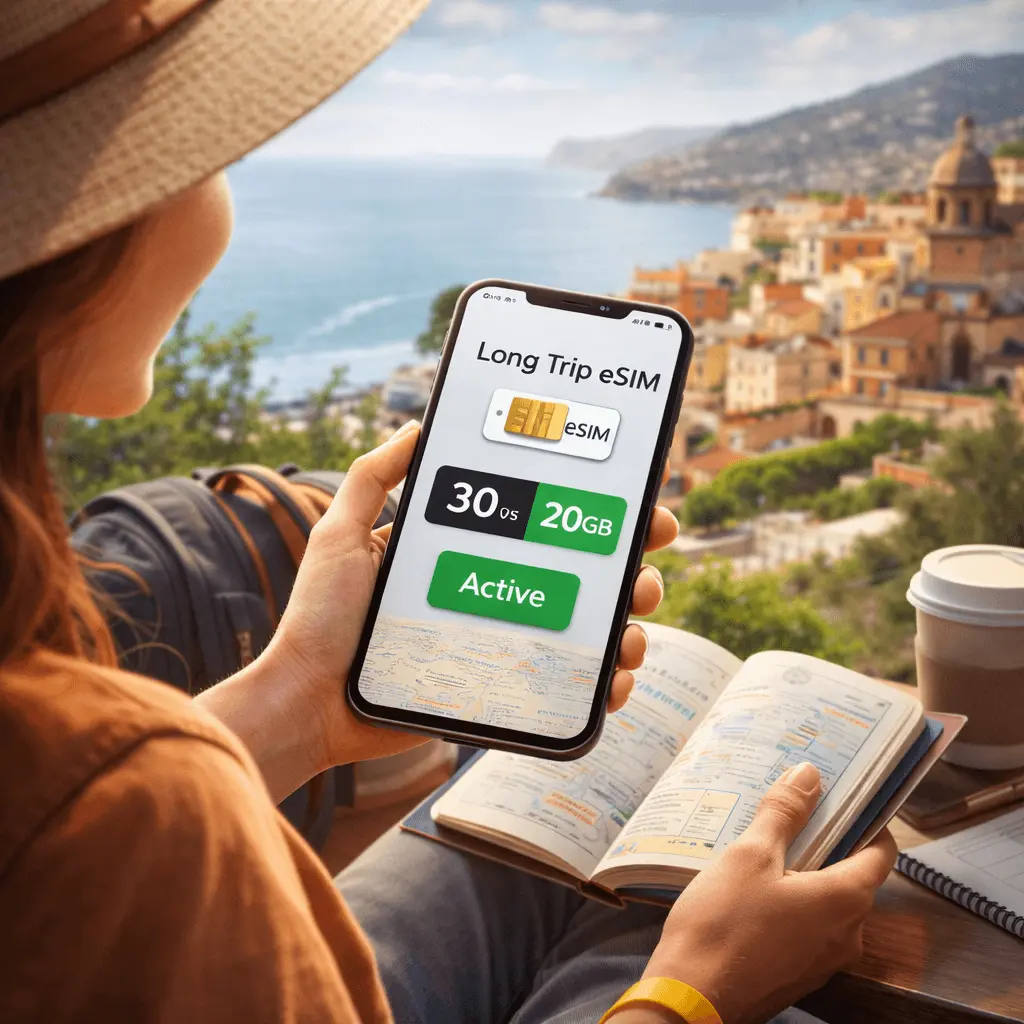
Long trips are the best kind of trips. Whether you’re spending a month in Europe, backpacking across multiple countries, taking an extended work-and-travel break, or visiting family abroad for a few weeks, long travel gives you time to settle in and actually live the experience.
But there’s one thing that can quietly make a long trip harder than it needs to be: staying connected. On short vacations, you can sometimes “get by” with hotel WiFi and minimal phone use. On long trips, that approach usually falls apart. You need reliable data for navigation, bookings, messaging, banking, work, and everyday life.
That’s where eSIM is a strong fit. It’s flexible, practical, and designed for travelers who don’t want to deal with SIM shops, roaming surprises, or constantly losing connection while moving around.
Why Connectivity Matters More on Long Trips
When you’re traveling for weeks, your phone becomes more than a travel tool — it becomes part of your daily routine. You’ll likely use mobile data for:
• maps and public transport every day
• ride apps and directions in unfamiliar areas
• messaging and calls with family and friends
• booking accommodation, tickets, and activities
• translations, reviews, and local recommendations
• bank alerts, verification codes, and account logins
• remote work tasks, emails, and video calls
And unlike a short trip, long travel often includes multiple cities (and sometimes multiple countries), which makes connectivity even more important.
The Problem With Roaming on a Multi-Week Trip
Roaming can feel convenient at first because your phone works immediately. But over weeks, roaming often becomes frustrating because:
• daily roaming fees add up fast
• rules can change between countries
• you may worry about accidental data use
• you’re never fully sure what the final bill will be
• many travelers end up turning data off “just in case”
For a long trip, that constant uncertainty gets old quickly. It limits how freely you use your phone, and it adds unnecessary mental load.
Why eSIM Works So Well for Long Trips
An eSIM is a digital SIM built into many modern phones. Instead of swapping a physical SIM card, you download a travel data plan directly to your device.
For long trips, the big advantages are:
• easy setup before you depart
• flexible plan options for different trip lengths
• the ability to top up without visiting a store
• regional coverage for multi-country routes
• the option to keep your home number active for calls and texts
It’s a simple way to stay connected without repeating the “buy a SIM” routine every time something changes.
Step 1: Pick the Right Plan for Weeks, Not Days
Long trips require a different mindset than short vacations. The goal isn’t to find the cheapest plan possible — it’s to find a plan that matches how you’ll realistically travel.
Think about:
How long you’ll be away
Some plans are designed for 7–10 days, others for 30 days, and some can be extended. For multi-week travel, look for plans that align with your trip length or allow easy renewals.
Where you’ll travel
If you’re staying in one country, a country-specific plan might be perfect. If you’re visiting multiple countries, a regional plan can reduce hassle and help you stay connected through border crossings.
How you use data
Your data needs depend on your travel style:
• Light use: messaging, maps, occasional browsing
• Medium use: frequent navigation, social media, travel bookings
• Heavy use: remote work, hotspot use, streaming, frequent uploads
It’s usually better to choose a plan that fits your real needs than to run out at the worst time.
Step 2: Set Up Before You Leave
One of the biggest perks of eSIM is that you can set everything up while you still have stable WiFi at home.
This matters for long trips because it avoids the most annoying travel scenario: arriving tired and then having to hunt for a SIM shop or airport kiosk. When you set up in advance, you land connected and can focus on getting to your accommodation smoothly.
Step 3: Use eSIM to Avoid Repeating the SIM Shop Routine
On long trips, you’ll have moments where plans change:
• you extend your stay
• you add a new city
• you decide to cross into a nearby country
• you move to a new region earlier than expected
With physical SIM cards, these changes can trigger new errands. With eSIM, changes are typically handled digitally. You can switch plans or add coverage without wasting time searching for shops, dealing with language barriers, or figuring out local registration rules.
Step 4: Top Up Without Disrupting Your Trip
The best long trips are flexible — and flexibility often means you don’t know exactly how much data you’ll use.
Long travel includes:
• extra days at the beach with more navigation and photos
• unexpected work calls
• more rides and bookings
• uploading memories more often
• hotspot needs when WiFi is unreliable
With eSIM, topping up usually takes minutes. You can add data when you need it, instead of either running out or overpaying upfront “just in case.” This keeps your connectivity consistent and your travel routine smooth.
Step 5: Stay Reachable With Your Main Number
Long trips don’t pause real life. You may still need your main number for:
• bank alerts and verification codes
• two-factor authentication for email and accounts
• important calls from family or work
• messages tied to your home number
Many phones support dual SIM use, allowing you to keep your home SIM active for calls and texts while using eSIM for travel data. This is a great setup for long trips because you get affordable data abroad without disconnecting from important home communication.
Long Trip Travel Styles eSIM Supports
Backpacking and multi-country routes
If your trip includes frequent border crossings, eSIM makes it much easier to stay connected without buying a new SIM every few days.
Remote work travel
If you’re working while traveling, having reliable mobile data reduces your dependence on public WiFi and helps you stay productive during transit days.
Visiting family abroad
When you’re staying longer, you’ll likely need everyday connectivity, not just tourist-level usage. eSIM makes that easy without having to fully replace your home setup.
Slow travel in one country
Even if you stay in one place, eSIM can still be ideal for clear pricing and simple management. You can keep your regular number and use travel data without worry.
Practical Tips for Staying Connected for Weeks
• Install your eSIM before you fly so you can connect instantly on arrival
• Use regional plans if you’ll cross borders often
• Track your data usage in your phone settings
• Use WiFi for big uploads when it’s reliable, and keep eSIM data for everything else
• Keep your home line available for critical calls and verification texts
• Top up proactively if you know you’ll have heavy days ahead
Final Thoughts
Long trips are meant to feel freeing, not stressful. Staying connected is part of that freedom — it helps you navigate confidently, stay safe, manage bookings, and keep up with real life back home.
eSIM is one of the simplest ways to stay connected for weeks because it’s flexible, easy to manage, and built for travel that doesn’t fit into a neat little schedule. Whether you’re moving across countries or settling into one place for a while, eSIM helps your phone keep up with your journey.